
If you've recently upgraded your vehicle’s turn signals to LED and were alarmed to find them flashing rapidly like a police siren (hyperflash), congratulations, you've come to the right place. You are not alone—this bothersome hyperflash issue is a common problem faced by many car owners when upgrading their lights.
Don’t worry, this doesn’t mean you installed the wrong bulbs. It’s simply your vehicle speaking in its own way. In this article, we’ll dive deep into the causes of hyperflash, analyze the limitations of traditional solutions, and reveal why Lasfit T3’s built-in decoder LED turn signal bulbs are the smartest, safest, and most hassle-free solution available today.
The Root of Hyperflash – Why is Your Car "Protesting"?
Your vehicle’s “hyperflash” isn’t caused by a malfunctioning new part, but rather a “misunderstanding” between your vehicle’s original “health monitoring system” and the newly installed LED bulbs. To understand this misunderstanding, we need to examine a hidden figure behind the scenes—the vehicle’s computer, particularly the Body Control Module (BCM).
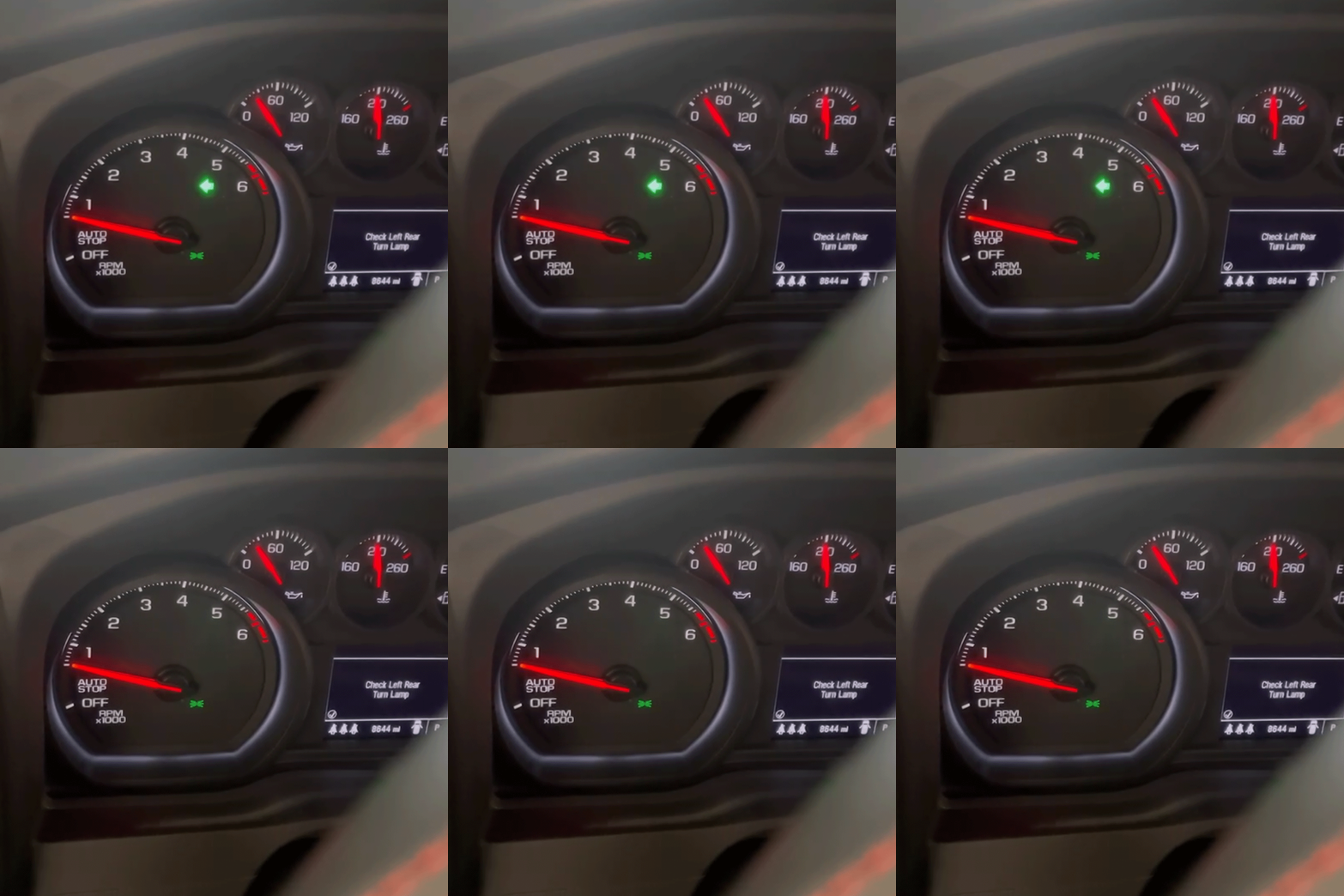
Error Code
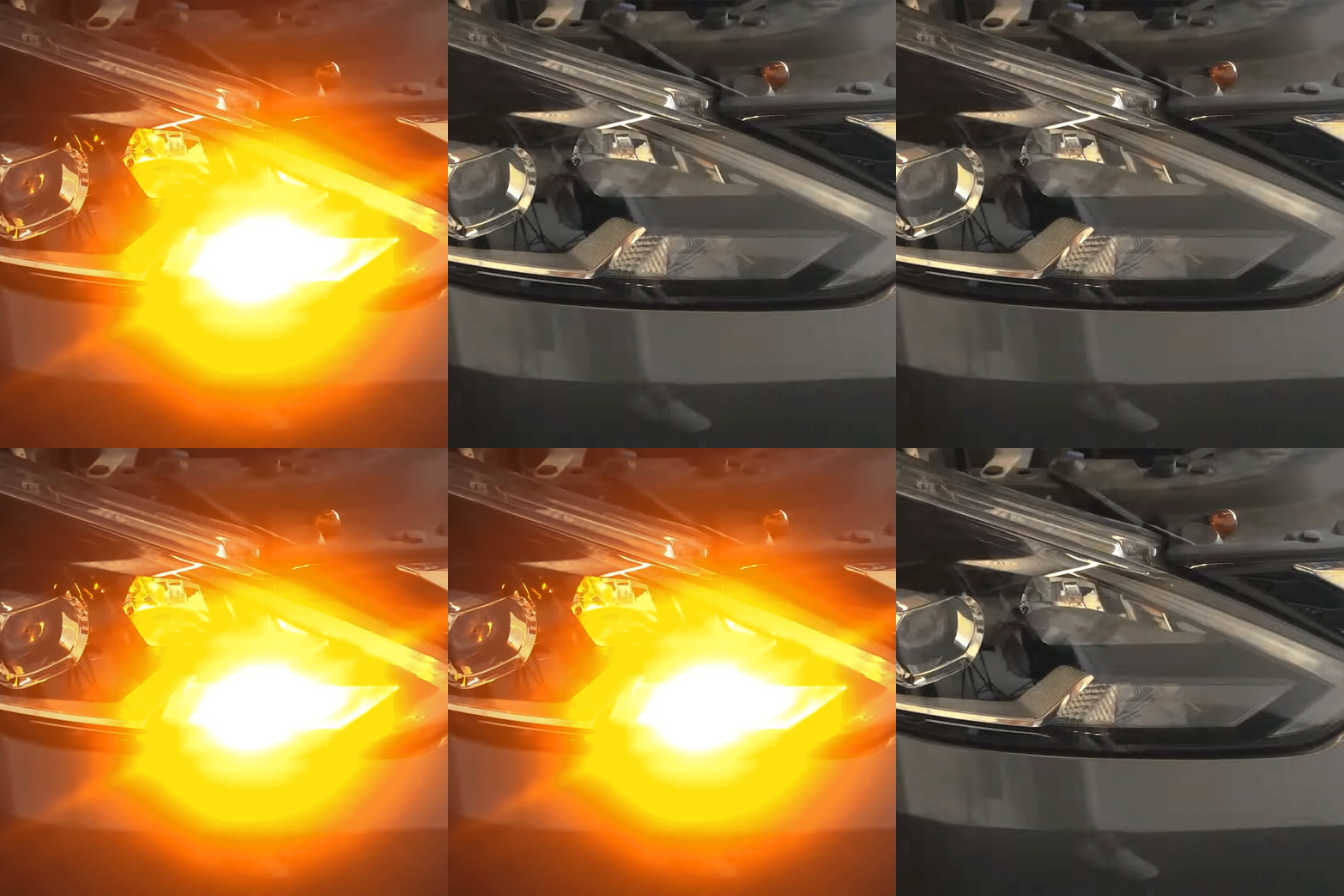
Hyperflash
1. The Diligent "Supervisor" — The Original Monitoring System
In your original vehicle design, the turn signal circuit is monitored by a meticulous “supervisor.” One of its primary tasks is to continuously check the “work status” of each turn signal bulb to ensure driving safety.
What it monitors: The turn signal bulbs (OEM halogen).
How it monitors: By checking the current flowing through the bulb circuit.
Judgment Logic:
• Normal state: When you activate the turn signal, a stable and higher current flows (for example, a 21W halogen bulb consumes about 1.75A of current), and the supervisor thinks, “Everything is normal, the bulb is working.”
• Fault state: If the bulb burns out (filament broken), the circuit disconnects, and the current drops almost to zero. The supervisor detects the “absence of current” and assumes, “The bulb is broken!” It then takes two actions:
①Turns on the malfunction indicator light on the dashboard.
②Causes the opposite side’s turn signal and dashboard indicator to flash at double the normal rate (hyperflash). This serves as a loud and effective visual and auditory alarm to alert the driver of the fault.
This system is tailored to traditional halogen bulbs and has been working reliably for years.
2. The Efficient "New Employee" — LED Bulbs
Now, you’ve replaced your vehicle’s halogen bulbs with LED bulbs. This is like firing the “old employee” and hiring a “new one.”
Halogen Bulbs (Old Employee): The working principle involves heating a tungsten filament to emit light, which generates a lot of heat. It's a “thermal radiation” light source with low efficiency, as most of the electrical energy is converted into heat, with only a small amount turning into light. Therefore, they consume more power (typically 21W), have lower resistance, and require higher working currents.
LED Bulbs (New Employee): The principle involves a light-emitting diode that directly converts electrical energy into light using semiconductor materials. This is a “cold light source” with high efficiency. As a result, it only requires very low power (possibly only 2-3W) to achieve the same or even better brightness compared to halogen bulbs, and the working current is much smaller.
You can visualize this with a "Before - After" comparison animation: One side showing Halogen, the other showing LED.
3. The Misunderstanding — Confusion of the “Supervisor”
Now, here's the dramatic moment.
When you install the LED bulb, the “supervisor” checks the current flowing through the circuit. It’s surprised to see the current drop dramatically from around 1.75A to about 0.25A!
The “supervisor” is only trained to handle halogen bulbs. Its logic is very simple and primitive:
“Such a small current ≈ Circuit almost broken ≈ Bulb is burned out!”
It can't understand “high efficiency” and “low power consumption” concepts. So, it follows its preset program: it marks it as a malfunction and triggers the hyperflash mode to alert you of what it believes is a “serious problem.”
So, the hyperflash you're seeing is not caused by a problem with the LED bulb itself, but by a “false alarm” from your vehicle's computer. Your car isn't “protesting” your lighting upgrade; it's just using the only “language” it knows to desperately report a “serious issue” it thinks exists.
In simple terms, this is a typical “old and new technology incompatibility” issue. The old monitoring standard can't correctly assess the normal working status of new technology.
Traditional Solutions — Why They Are Just "Stopgaps"
After understanding the root cause of hyperflash, the goal becomes clear: how to make the vehicle's computer detect “normal” current to prevent false alarms. When looking for solutions, two traditional options are often considered. Unfortunately, they both have clear limitations.
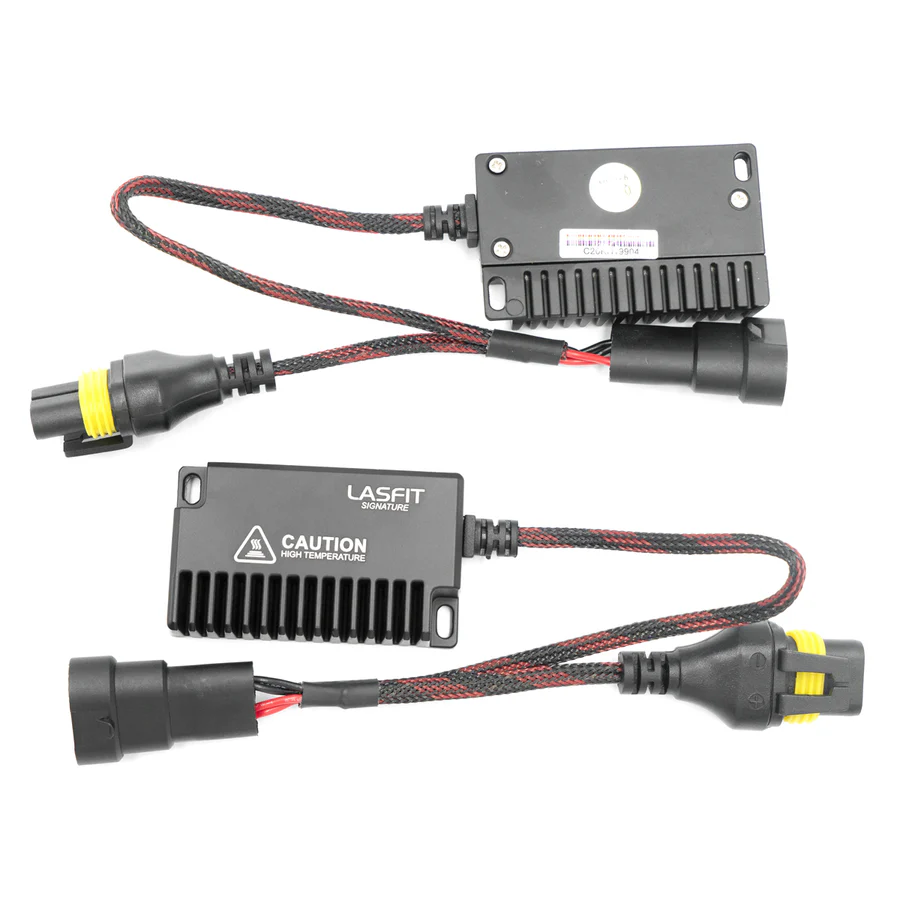
Solution 1: Adding Load Resistors — Making the “New Employee” Act Like the “Old Employee”
How it works: A resistor is added to the circuit to simulate the current of a halogen bulb, thereby “tricking” the vehicle's computer. (This is a “deception” tactic. A high-power resistor is connected in parallel with the LED bulb. The resistor consumes a significant amount of power, mimicking the “high power consumption” of the halogen bulb. When the vehicle's computer detects the current, it sees the normal range and assumes “the bulb is fine,” stopping the hyperflash.)
Potential risks:
• Heat and Melting Risk: The load resistor generates high temperatures during operation. Therefore, the installation position must ensure proper heat dissipation to avoid placing the resistor too close to plastic parts or wiring, to prevent unnecessary hazards.
• Complex Installation: Using an external load resistor means your turn signal system is made up of “bulb + resistor,” not an integrated solution. You need to find a suitable installation location for the resistor and ensure it is securely fixed. This adds steps and complexity to the installation.
Solution 2: Replacing the Flash Relay
How it works: This is a “workaround” tactic. Since the original “supervisor” (relay) doesn’t understand the low current, we replace it with a new relay designed for LED bulbs, which has a lower current trigger threshold. Even when it detects the lower current of LEDs, it assumes everything is normal and outputs a normal flash rate.
Potential risks:
• Compatibility Issues: This method highly depends on your vehicle model. For older, simpler vehicles, the turn signal is controlled by an independent, plug-in relay (usually in the fuse box), and this solution works. However, for most modern vehicles, the turn signal is controlled by the integrated Body Control Module (BCM) or Intelligent Power Distribution Module (IPDM). These modules are the “super brain” of the car and cannot be replaced independently. You can’t just replace the BCM for the turn signal issue—it’s expensive and complicated.
• Cost and Uncertainty: Even if your vehicle has an independent relay, you’ll spend considerable time researching the exact model and installation position that fits your vehicle. After purchasing, you may encounter issues with socket mismatches, incomplete functions (e.g., not supporting flashers), and end up spending money on unusable parts.
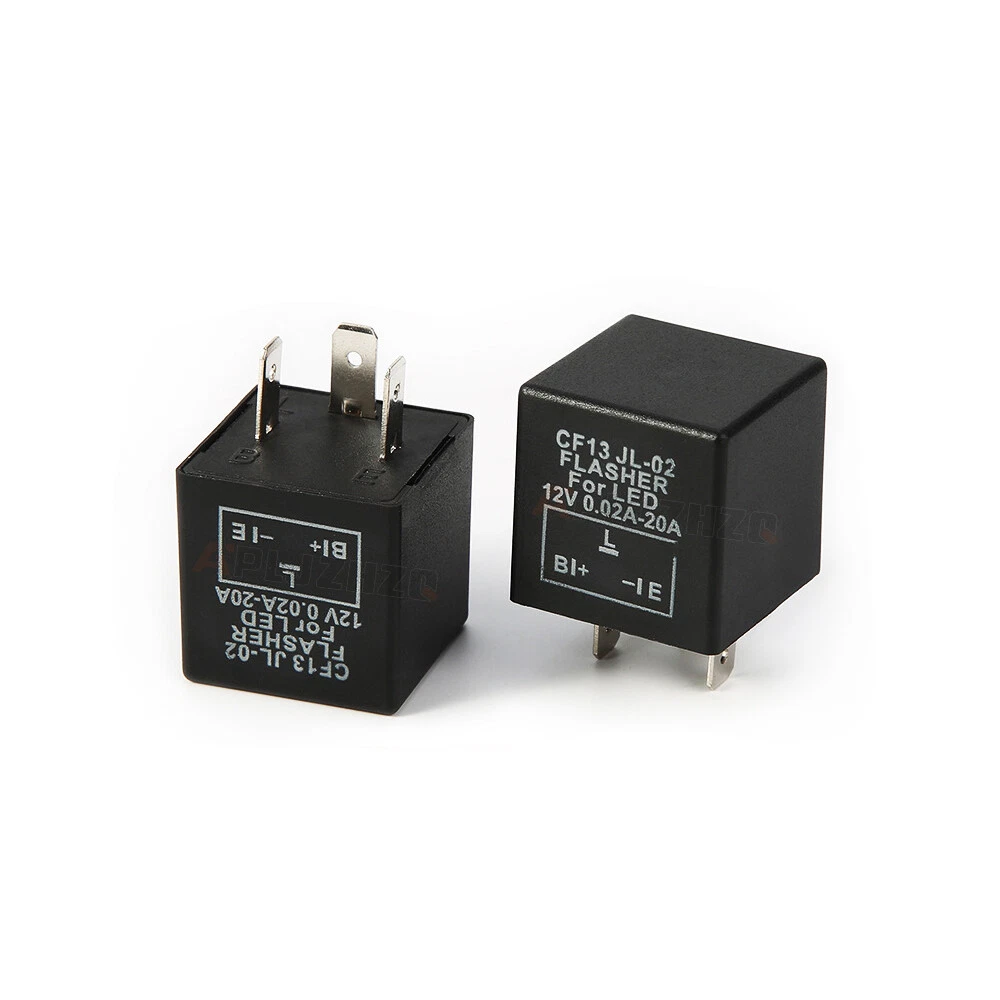
As you can see, both “adding load resistors” and “replacing the flash relay” have significant safety, efficiency, or compatibility drawbacks. These were solutions designed under certain technical conditions, but they are not ideal.
So, is there a method that can “fool” the computer perfectly while being safe, efficient, and universally compatible?
The answer is yes, and that’s the modern, elegant solution we are discussing: the built-in smart decoder LED turn signal bulbs. It’s like a skilled “translator” that allows the “new employee” (LED bulb) to communicate seamlessly with the “supervisor” (vehicle computer).
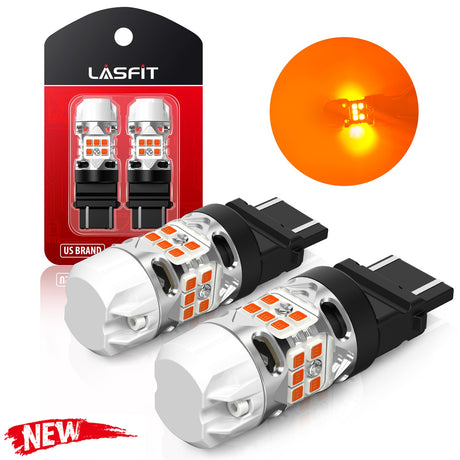
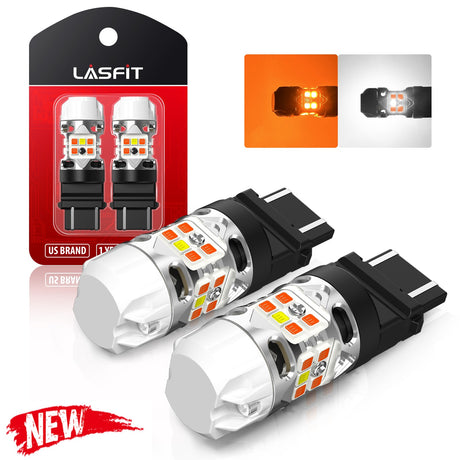
The Ultimate Solution — Lasfit T3: This “New Employee” Comes with a Clever “Translator”
Why Lasfit T3 is a Smarter Choice
It no longer relies on bulky, external add-ons but instead lets the “new employee” (LED bulb) communicate intelligently with the “supervisor” (vehicle computer) itself.
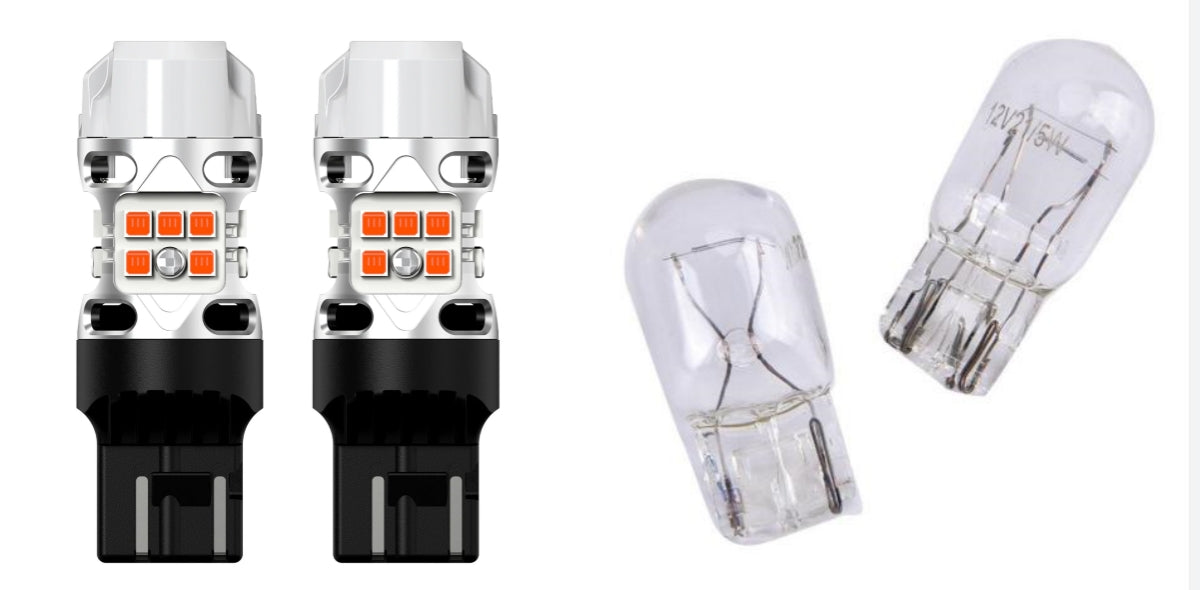
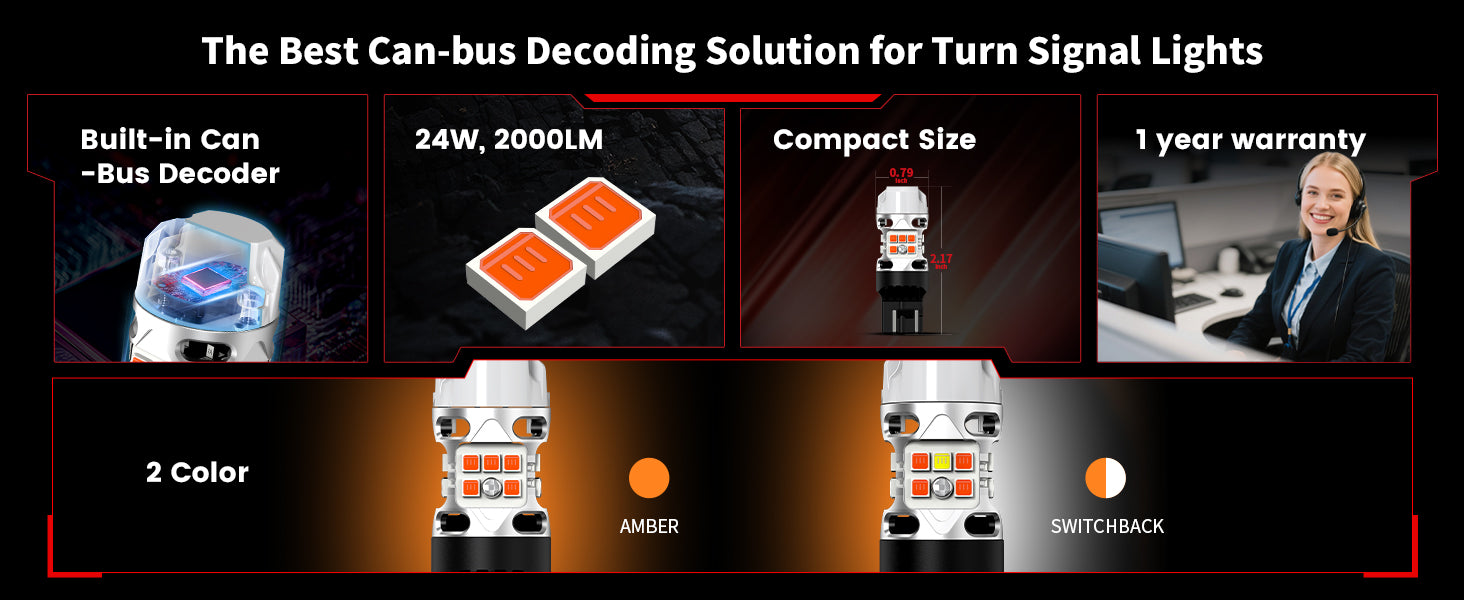
1.Smart Built-in Decoder: From "Deception" to "Communication"
How it works: The Lasfit T3 Series bulb integrates a precise decoder chip internally. This chip acts like a real-time “translator” or “signal simulator.” When it works, it not only emits light but also intelligently simulates the current waveform and load characteristics expected by the vehicle's computer, similar to a halogen bulb.
Core advantages:
• No external parts: Say goodbye to bulky, dangerous load resistors and the search for non-existent relay replacements. Plug-and-play, solving compatibility issues.
• More stable, more thorough: Compared to previous products, the Lasfit T3 extends the decoder adaptation time to 30 minutes. This means it can establish a deeper and more stable “handshake” and calibration with your vehicle’s computer, ensuring stable, error-free, and non-hyperflashing results, achieving a new level of compatibility across various vehicle models.
• Safe and worry-free: Lasfit T3 Series has a built-in intelligent temperature protection system. If the bulbs run for too long or overheat, it will issue a hyperflash or error code reminder. Don’t worry, this is not a malfunction of the product but a self-protection mechanism to ensure the LED bulbs remain stable within the optimal temperature range. You don’t need to worry

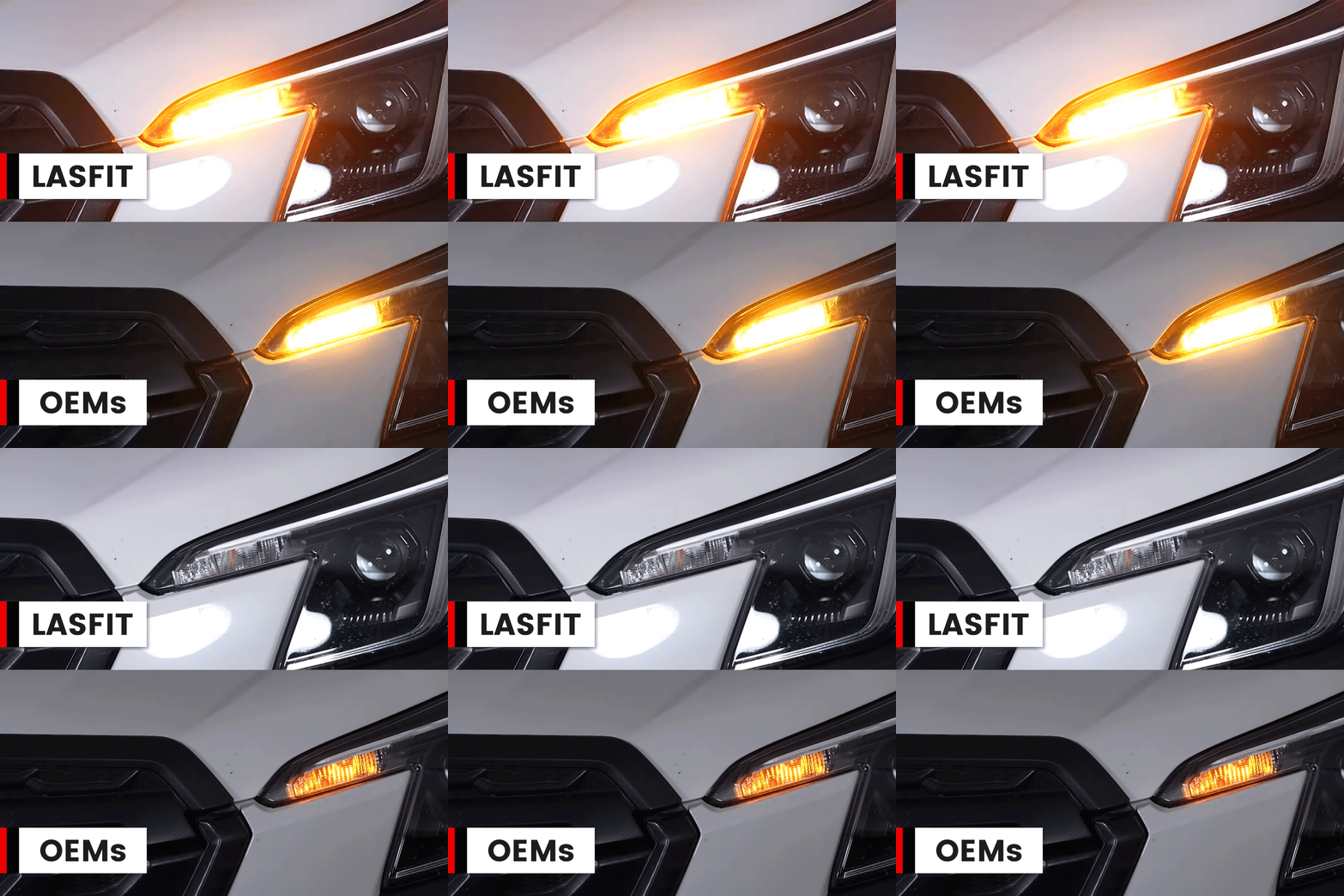
Lasfit T3 Turn Signals on Subaru

Lasfit T3 Turn Signals on 2021 Chevy Silverado 2500

Lasfit T3 Turn Signals on 2019 Jeep Grand Cherokee
2. The Perfect Balance of Brightness and Safety
The design of the T3 Series perfectly addresses the dual needs of car owners:
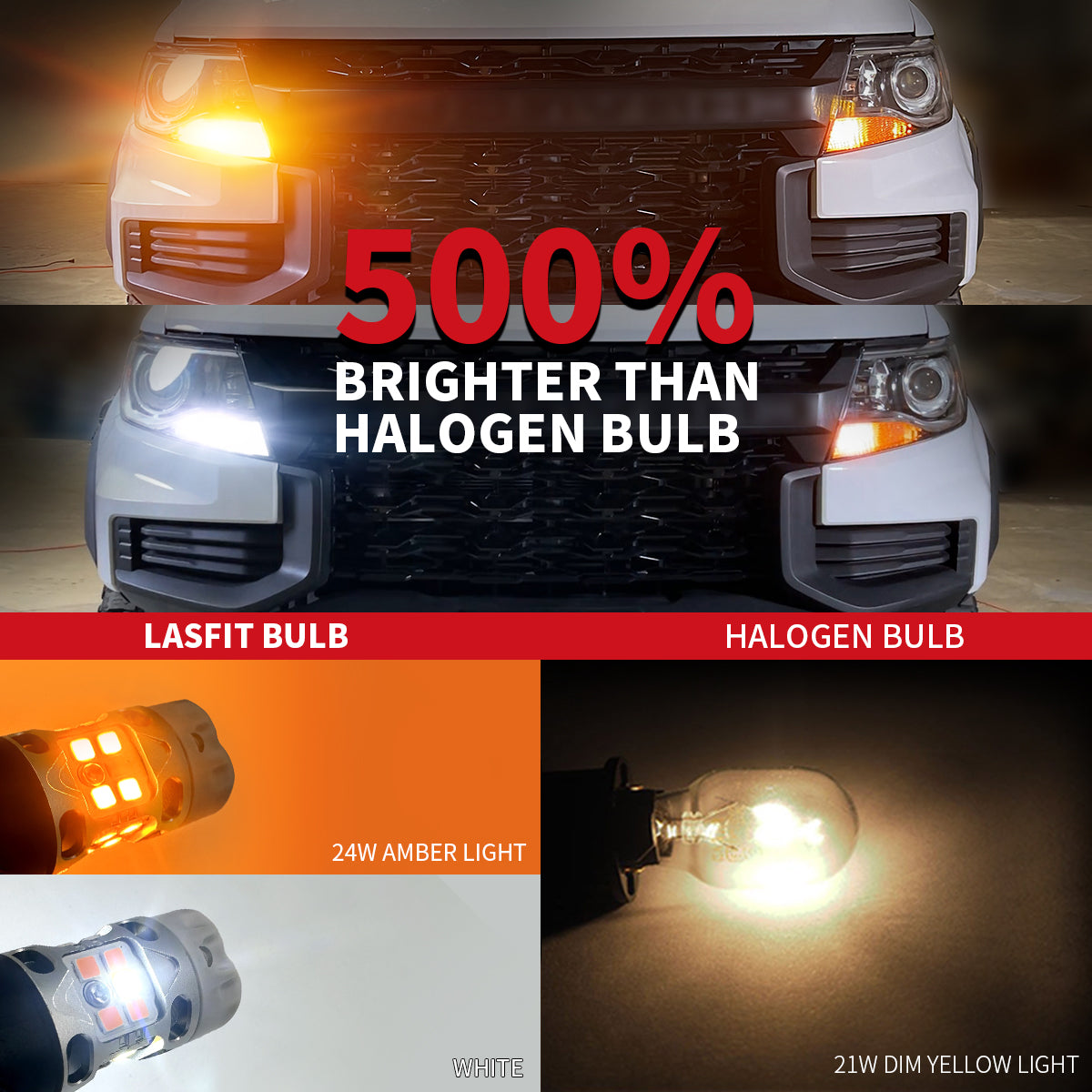
• More Visible: Its brightness far surpasses the original halogen bulbs, ensuring that your turn signal intentions are clearly visible to other drivers even in direct sunlight or bad weather. This significantly enhances safety.
• Non-Glare: At the same time, the T3 Series uses carefully engineered optical design to provide a smooth, even beam of light without the harsh scatter typical of lower-quality LEDs. You won’t need to worry about "blinding" the driver behind you and getting complaints. It’s a win-win for both you and others on the road.
3. Ultra-Simple Installation, Done in 4 Steps
Forget the hassle of complicated wiring and searching for a relay. We believe upgrading your vehicle should never be a complicated project. One of Lasfit T3's design philosophies is “maximum simplicity in installation.” Here’s how to do it:
Step 1: Remove the halogen bulb.
Step 2: Connect the LED bulb.
Step 3: Test if the LED bulb lights up.
Step 4: Secure the bulb.
No tools, no modifications—anyone can complete this in under 5 minutes.
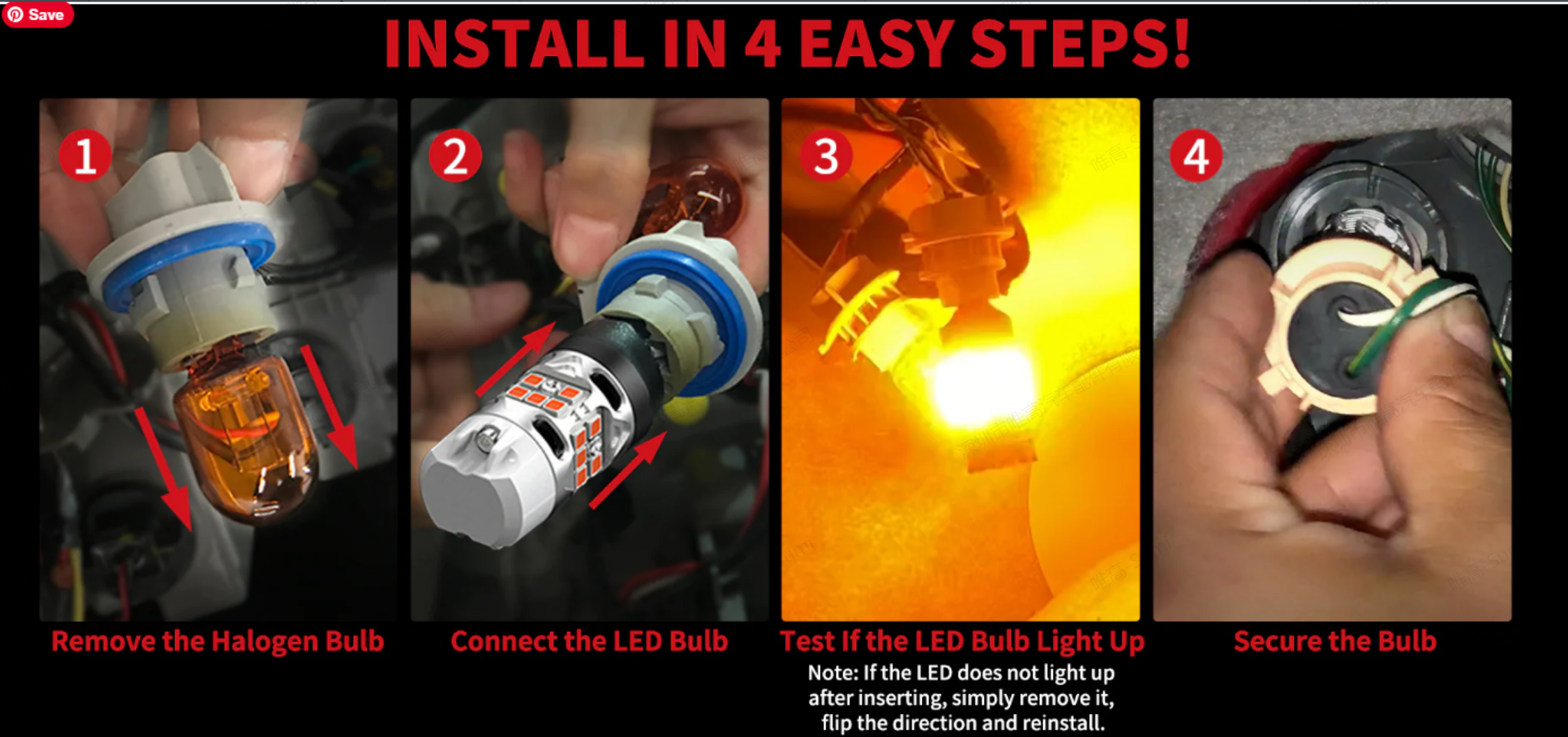
Tips:For front turn signals, usually, there's no need to remove the assembly. It can generally be completed within 5 minutes.
For rear turn signals, you will need to remove the assembly, adding extra time to the process.
4. Outstanding Quality, Worry-Free Assurance
Having a “smart brain” isn’t enough; a strong “body” is also necessary. Lasfit T3 Series uses high-quality LED chips and a durable aerospace-grade aluminum heat sink to ensure long-lasting, stable light output. Its superior cooling design guarantees stable performance in harsh, enclosed automotive environments, significantly improving reliability and durability.
Conclusion: Make a Smarter Investment
From the cumbersome “adding load resistors” to the compatibility issues with “replacing relays,” to the “built-in smart decoding” of Lasfit T3 Series, we have finally found the perfect upgrade path that balances efficiency, safety, convenience, and stability.
The Lasfit T3 Series is no longer a part that your vehicle has to “tolerate.” It is a partner that can intelligently “communicate” with your vehicle’s system. You no longer need to worry about hyperflash errors, safety risks, or complicated installation steps. Instead, you can simply enjoy the brighter, faster, and longer-lasting lighting experience that LED technology brings.
Upgrade to Lasfit T3 now, say goodbye to complications and risks, and begin a new chapter with intelligent lighting.
Have you also been troubled by the hyperflash issue with LED turn signal bulbs? Feel free to share your experience or ask questions in the comments below!



1 comment
Installed these on the front of my 2021 silverado 1500 custom and am not getting blinking and getting hyperflash. After all the touting about this…. why am I still getting this issue??